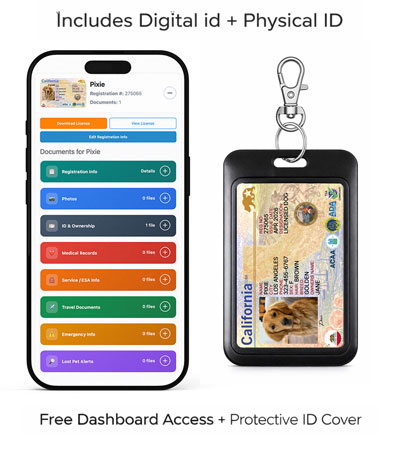
Washington County Dog Registration Information
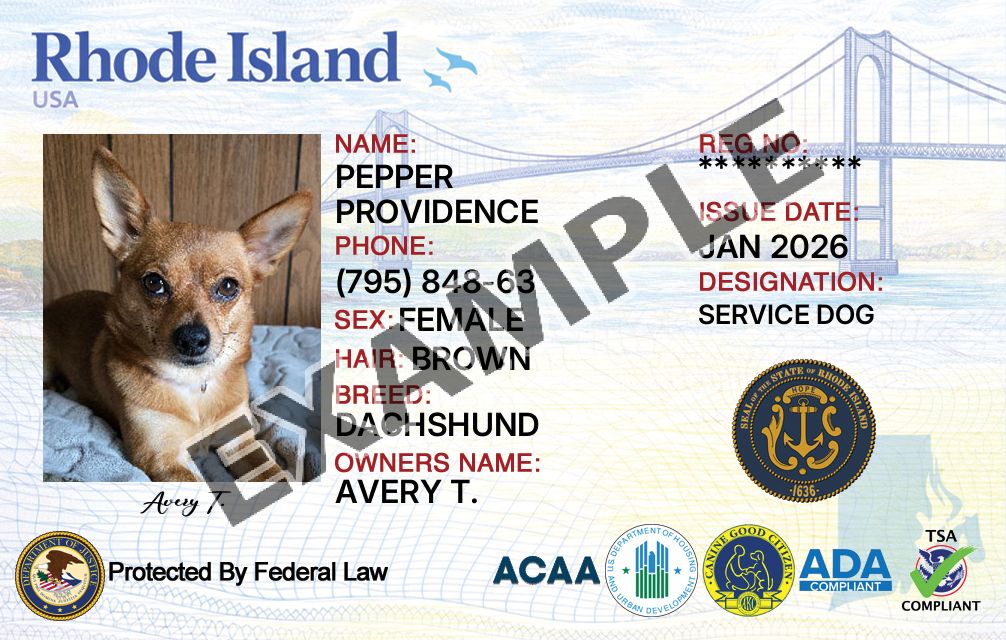
Service Dogs and Emotional Support Animals in Washington, Rhode Island
If you’re asking where do I register my dog in Washington County, Rhode Island for my service dog or emotional support dog, the most important thing to know is that Rhode Island dog registration is typically handled locally through your city or town—not through a single countywide “service dog registry” or ESA database.
In practice, what most residents mean by “registering” is getting a dog license in Washington County, Rhode Island through the Town Clerk (or another designated local office). Separately, a dog’s service dog status is defined by disability law and training—not by a special license card—while an emotional support animal (ESA) is defined by disability-related documentation and specific legal contexts.
Where to Register or License Your Dog in Washington County, Rhode Island
Because licensing is handled locally, contact the Town Clerk in the town where you live. Below are several official offices within Washington County, Rhode Island that residents commonly use to ask about licensing, renewals, and required paperwork. (If you live in a different Washington County town than the examples below, use your town’s clerk or animal control office.)
Town of Charlestown — Office of the Town Clerk
Address: 4540 South County Trail
City/State/ZIP: Charlestown, RI 02813
Phone: (401) 364-1200
Email: arweinreich@charlestownri.gov (Town Clerk)
Email: jgabriele@charlestownri.gov (Deputy Town Clerk)
Office hours: Monday–Friday
Hours: 8:30 a.m. to 4:30 p.m.
Town of Narragansett — Town Clerk’s Office
Address: 25 Fifth Avenue
City/State/ZIP: Narragansett, RI 02882
Phone: (401) 782-0624
Email: Not listed on the office page (ask the clerk’s office by phone)
Office hours: Not listed on the office page (call to confirm)
Town of Exeter — Town Clerk’s Office
Address: 675 Ten Rod Road
City/State/ZIP: Exeter, RI 02822
Phone: (401) 294-3891
Email: Email links are provided per staff member (call the office if you need the address typed out)
Office hours: Monday–Friday
Hours: 9:00 a.m. to 4:00 p.m.
Town of Hopkinton — Town Clerk
Address: 1 Town House Road
City/State/ZIP: Hopkinton, RI 02833
Phone: (401) 377-7777 ext. 1
Email: Not listed on the town clerk page (call to request the correct email)
Office hours: Not listed on the town clerk page (call to confirm)
Town of Westerly — Town Hall (General Contact)
Address: 45 Broad Street
City/State/ZIP: Westerly, RI 02891
Phone: (401) 348-2500
Email: Not listed on the general contact page (call to reach the Town Clerk)
Office hours: Monday–Friday
Hours: 8:30 a.m. to 4:30 p.m.
Tip: Ask the operator to connect you to the Town Clerk for dog licensing, or to Animal Control for enforcement questions.
Town of South Kingstown — Animal Control (Rabies/Enforcement Questions)
If your question is more about enforcement, stray dogs, or rabies concerns (rather than the clerk’s licensing transaction), animal control is often the right place to start.
Address: 1790 Kingstown Road
City/State/ZIP: Wakefield, RI 02879
Phone: (401) 783-3321 ext. 5440
Email: police@southkingstownri.gov
Office hours: Not listed on the animal control page (call to confirm)
For a new or renewal animal control dog license Washington County, Rhode Island question, ask whether the Town Clerk’s Office processes the payment and tag, and what proof is needed.
Overview of Dog Licensing in Washington County, Rhode Island
What “registering” usually means
When people search for where to register a dog in Washington County, Rhode Island, they’re usually looking for the local process to obtain a municipal dog license and tag. In Rhode Island, dog licensing is generally completed through the city or town where the owner/keeper lives. In Washington County, that means you typically work with your town (for example, Charlestown, Exeter, Hopkinton, Narragansett, Westerly, and other Washington County municipalities).
Why dog licenses exist
A dog license helps local officials confirm ownership, encourages rabies vaccination compliance, and supports animal control operations. If your dog gets loose, the license tag can help reunite you with your dog more quickly.
State timing basics (why April matters)
Rhode Island law directs dog owners/keepers to obtain an annual license in April, and the license is typically effective starting May 1. Your town clerk can confirm the exact renewal window, late fees, and what to do if you’re licensing a dog mid-year.
How Dog Licensing Works Locally in Washington County, Rhode Island
Step 1: Start with your town clerk (not the county)
Washington County does not typically operate a single unified “county dog licensing” counter the way some other states do. Instead, most residents obtain a dog license in Washington County, Rhode Island by contacting the Town Clerk in their municipality. If you are unsure which office handles it, call your town hall and ask for the Town Clerk’s licensing desk.
Step 2: Prepare the required documents
Requirements vary a bit by town, but most local clerks will ask for proof of current rabies vaccination and basic owner and dog information. If you recently moved to Washington County, expect to show proof of residency (for example, a lease, utility bill, or similar documentation your town accepts).
Step 3: Rabies vaccination requirements
Rhode Island generally requires dogs above a minimum age threshold to be vaccinated against rabies, and local licensing pages commonly tie licensing eligibility to a current rabies certificate. If your rabies certificate is expired, your town may require an updated vaccination record before issuing or renewing a license.
Step 4: Pay the local licensing fee and obtain the tag
Licensing fees are set locally and can differ by municipality and by whether your dog is spayed or neutered. Many towns issue a tag that should be attached to the dog’s collar. Ask your town clerk:
- Whether licenses must be renewed annually
- Whether the town offers online renewals, mail-in renewals, or in-person service
- Whether there are late fees after the renewal window
- What to do if you lost a tag (replacement process)
Step 5: Know who enforces licensing and rabies rules
While Town Clerks often handle issuing licenses, enforcement may involve animal control and/or local police departments. If you have a question about citations, bites, quarantine rules, or suspected rabies exposure, animal control is usually the quickest path to accurate guidance.
Service Dog Laws in Washington County, Rhode Island
A dog license is not the same as a service dog
A dog license is a local registration step required for dogs kept in a municipality. A service dog, on the other hand, is defined by disability law and the dog’s training to perform specific tasks for a person with a disability. Getting a local license does not make a dog a service dog, and a service dog does not become “official” because of a special license tag purchased online.
No official “service dog registration” is typically required
Many websites advertise service dog certificates, IDs, or registrations. Those are generally not required to establish a dog’s legal status as a service dog. In most everyday situations, what matters is whether the dog is trained to do work or tasks related to a person’s disability and whether the handler meets the applicable legal standards.
What offices can and can’t do
Your town clerk can usually help with municipal licensing and can tell you what the town requires for a standard dog license. However, town licensing staff typically do not “certify” a dog as a service dog. If you need help with access disputes or understanding service dog rights and responsibilities, consider contacting a qualified attorney or a disability rights organization for guidance tailored to your situation.
Practical guidance for service dog handlers
- License locally anyway: Even if your dog is a trained service dog, you may still need a municipal license and rabies compliance.
- Keep vaccination records accessible: Rabies documentation is frequently needed for licensing and can be important during travel or emergencies.
- Know the difference between access rights and licensing: Public-access rules are separate from local dog licensing rules.
Emotional Support Animal Rules in Washington County, Rhode Island
An ESA is not the same as a service dog
An emotional support animal provides comfort or emotional benefit, but ESAs are generally not the same as trained service dogs. ESAs typically do not have the same public-access rights that apply to service dogs. That difference matters in places like restaurants, grocery stores, and other businesses.
What “ESA documentation” usually means
ESA status is often tied to disability-related documentation for specific legal contexts (most commonly housing-related situations). It is not typically created by purchasing an online registration. If you believe you need an ESA accommodation, the correct documentation and process may depend on the setting and the applicable law.
You still generally need a municipal dog license
If you keep an ESA dog in a Washington County municipality, you should still expect to follow local rules for a dog license in Washington County, Rhode Island, including meeting rabies vaccination requirements and renewing the license on time.
How to ask your town the right question
When you call the clerk’s office, you’ll get faster help if you ask: “What do I need to license my dog in this town, and do you require current rabies documentation at the time of renewal?” If you also have an ESA or service dog, you can add: “Are there any local fee exemptions or special procedures?” (If your town offers them, the clerk can explain what proof is required.)
Frequently Asked Questions
Register A Dog In Other Rhode Island Counties
Select your county below to get started with your dog’s ID card. Requirements and license designs may vary by county, so choose your location to see the correct options and complete your pup’s registration.